
No Hot Water
An electric unit may have a failed element, thermostat, breaker, or wiring issue. A gas model may have an ignition, burner, control valve, or fuel-supply problem. Testing isolates the fault before parts are replaced.
Serving Frisco, Texas & surrounding areas
Open 24/7
Prompt repairs, practical replacement options, and clear pricing for conventional tank and tankless systems.
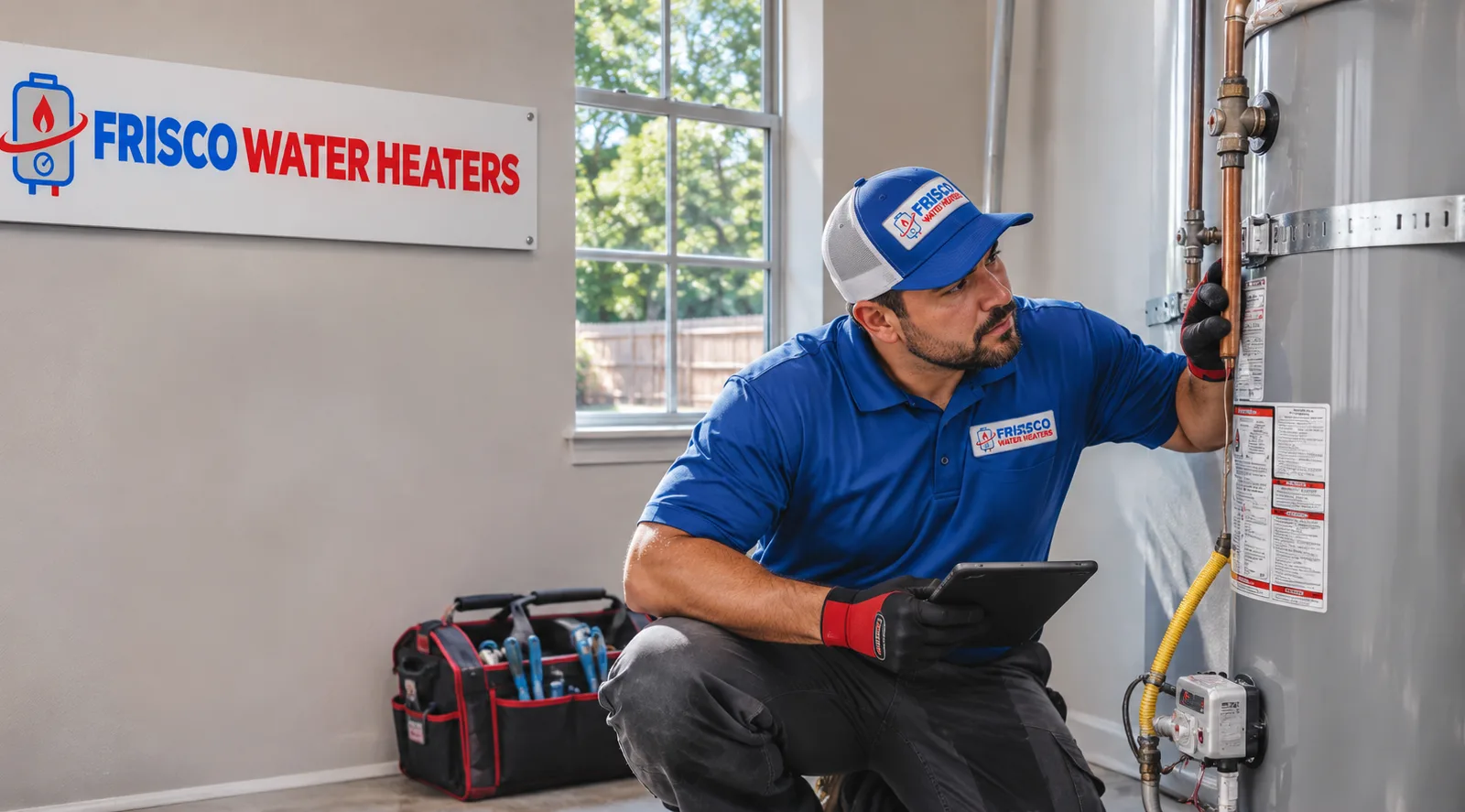
When hot water stops, you need a water heater company Carrollton homeowners can count on for a clear diagnosis and a practical next step. Frisco Water Heaters handles leaking tanks, inconsistent temperatures, ignition trouble, failed heating elements, unusual noises, and systems that produce no hot water at all.
Our team checks the equipment before recommending repair or replacement. That means identifying the failure, considering the unit’s condition and service history, and explaining what the work will involve. Our water heater specialists serving Frisco, TX bring the same straightforward approach to customers in Carrollton who need dependable work and useful answers.
Carrollton contains established neighborhoods as well as newer development, so water heaters are found in garages, interior utility closets, attics, and other configurations. Access affects the labor, safety precautions, and replacement plan. We account for venting, drainage, fuel or electrical connections, available space, and code requirements rather than treating every installation alike.
An electric unit may have a failed element, thermostat, breaker, or wiring issue. A gas model may have an ignition, burner, control valve, or fuel-supply problem. Testing isolates the fault before parts are replaced.
Water may escape from a supply connection, temperature and pressure relief valve, drain valve, or the tank itself. A leaking tank generally requires replacement, while some fitting and valve leaks can be repaired.
Water that runs cold too quickly or changes temperature may point to thermostat trouble, a damaged dip tube, sediment buildup, an undersized unit, or excessive demand.
Popping or rumbling can be associated with mineral sediment in a tank. Rust-colored hot water may indicate corrosion, an anode rod problem, or deterioration inside the unit.
Tankless systems may shut down because of ignition faults, restricted flow, venting trouble, scale accumulation, or sensor errors. The displayed code is a starting point, not a complete diagnosis.
A temperature and pressure relief valve that releases water requires attention. The cause may involve excess temperature, elevated pressure, thermal expansion, or a defective valve.
A ruptured tank, active leak, burning smell, or gas odor calls for immediate action. If water is escaping, avoid standing water near electrical equipment. Shut off the water supply only if the valve is safe and easy to reach. For a suspected gas leak, leave the building and contact the gas utility or emergency services from a safe location.
Emergency water heater repair Carrollton customers request often begins with stopping damage and making the area safe. We then determine whether a repair can restore dependable operation or whether the tank has failed. A corroded or split storage tank cannot be patched into reliable service. It must be replaced.
Not every loss of hot water is dangerous, but it can still disrupt bathing, cleaning, and daily routines. Share the unit type, visible symptoms, location, and any model or error information when arranging service. Those details help the technician prepare for the visit.
Repair makes sense when the tank is sound, the failed component is replaceable, and the rest of the system remains serviceable. Common repairable faults include electric heating elements, thermostats, accessible plumbing connections, drain valves, some relief valves, and certain gas or tankless controls. The diagnosis must also account for why the part failed.
Replacement is usually the sounder choice when the storage tank leaks, corrosion is advanced, failures keep returning, or the required repair would put substantial money into a deteriorated unit. Capacity matters too. A unit that has never met household demand may need a different size or recovery rate rather than another repair.
A replacement assessment covers fuel type, first-hour rating for tank models, flow rate for tankless equipment, venting, electrical capacity, gas supply, drain-pan needs, thermal expansion, shutoff access, and the route for removing the old unit. Equipment efficiency and purchase price matter, but they should be weighed against installation requirements and expected household use.
Step 1 of 5
Tell us whether the unit is gas, electric, tank, or tankless, where it is installed, and what changed. Mention active water, odors, noises, error codes, or a tripped breaker.
Step 2 of 5
The technician examines the unit and relevant connections, then tests the components tied to the symptoms. Safety controls, venting, pressure conditions, and visible corrosion are considered where applicable.
Step 3 of 5
You receive an explanation of the fault, the proposed scope, and the factors affecting price. If replacement is appropriate, the options are matched to the home’s demand and existing installation.
Step 4 of 5
Repairs or replacement proceed after the scope is approved. Connections and controls are checked, and the work area is kept orderly throughout the job.
Step 5 of 5
The system is started and checked for proper heating, leaks, and normal control operation. You also receive guidance on settings and any maintenance relevant to the installed equipment.
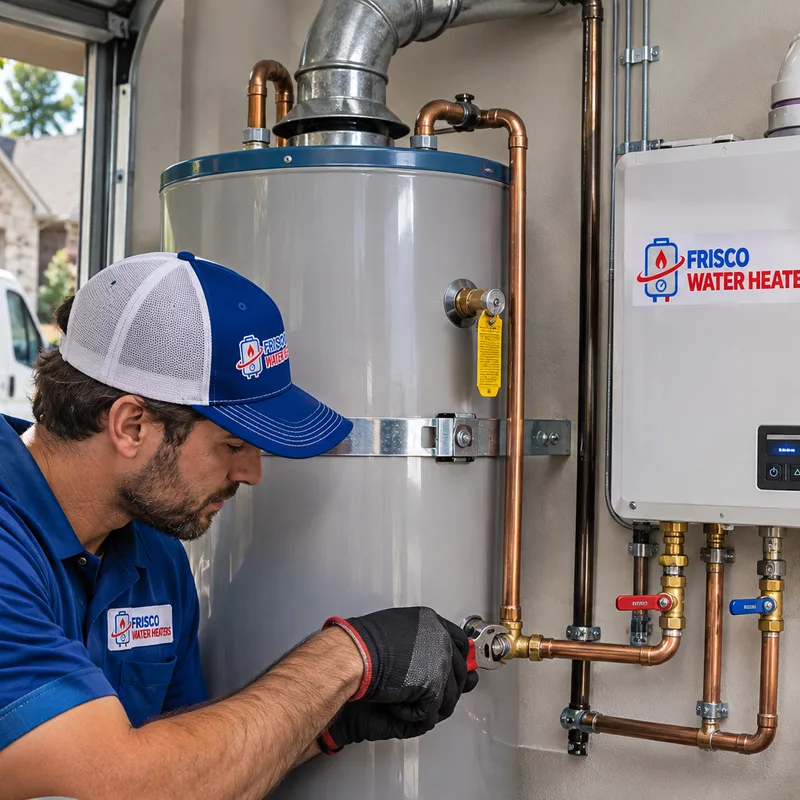
Conventional storage water heaters keep a set volume of heated water ready for use. They are familiar, widely available, and often practical when the existing utility connections and space already suit a tank. Selecting one involves more than matching the old tank’s exterior dimensions. Fuel type, tank capacity, first-hour rating, recovery rate, venting, and installation clearance all matter.
Tankless water heaters heat water as it passes through the unit. Proper selection depends on required flow and the temperature rise needed to reach the desired outlet temperature. Gas-line capacity, venting, combustion air, electrical service, condensate disposal, and manufacturer clearance requirements can affect whether conversion is sensible.
Both types need maintenance. Tank units may need sediment flushing and anode-rod inspection, while tankless units may require descaling based on water conditions and manufacturer guidance. Maintenance cannot reverse a leaking tank, but it can reveal developing valve, corrosion, or combustion issues before they cause a larger interruption.
Carrollton spans Dallas, Denton, and Collin counties, and permit or inspection requirements depend on the property’s jurisdiction and the work being performed. A professional replacement should account for the rules that apply at the actual address rather than making assumptions based on the mailing city alone.
The installation location also changes the work. An attic unit requires a safe removal route and careful protection against water damage. A garage installation may involve impact protection depending on placement. An interior closet can place tighter limits on dimensions, combustion air, vent routing, and service clearance. Drain pans and approved discharge routing are especially important where leakage could damage finished areas.
North Texas temperature swings also affect hot-water demand and equipment operation. Incoming water is colder during winter, so a heater must create a greater temperature rise. This is particularly relevant when sizing tankless equipment because available flow at a chosen outlet temperature depends on that rise. A sound recommendation uses the household’s actual fixtures and likely simultaneous demand.
A small leak or intermittent fault can become a full loss of hot water. Arrange an assessment while the symptoms are clear and the surrounding area is still protected.
Call for a Free QuoteMany common repairs can be completed during one visit when the diagnosis is straightforward and the required part is available. Replacement timing depends on equipment availability, installation access, permit requirements, venting or utility changes, and whether water damage has made the work area unsafe.
Shut off the water supply only if you can reach the correct valve without entering standing water or approaching a hazardous electrical or gas condition. For an electric unit, do not touch the breaker or equipment while wet. If you smell gas, leave the property and contact the gas utility or emergency services from a safe place.
A tank that is leaking through its metal shell generally must be replaced. Leaks from accessible fittings, the drain valve, supply connections, or some relief-valve problems may be repairable. The source needs to be confirmed because water often travels along pipes or the tank jacket before reaching the floor.
The cost depends on the diagnosis, equipment type, part, access, and whether after-hours response is needed. Replacing a thermostat or heating element is a different scope than correcting venting, repairing a tankless control fault, or replacing a failed tank. Frisco Water Heaters confirms the proposed work and price after inspecting the system.
A straightforward like-for-like replacement is often completed within a working day, but the actual schedule depends on access and required changes. Attic removal, tight closets, drain-pan work, vent modifications, gas-line changes, electrical upgrades, or jurisdictional inspections can extend the process.
A tankless unit is suitable when it can meet the home’s simultaneous flow demand and the property can support its utility, venting, drainage, and clearance requirements. In winter, colder incoming water increases the required temperature rise, which must be included in sizing rather than relying on a nominal flow rating alone.
Permit and inspection requirements depend on the property’s jurisdiction and the scope of work. Because Carrollton extends into three counties and properties can fall under different authorities, the installation address should be checked before work begins. Fuel, vent, electrical, plumbing, and safety requirements may all apply.
Provide the fuel type, whether the unit has a tank, its location, the visible symptoms, and any model information or error code you can read safely. Photos of the unit and surrounding connections can also help identify access limits and likely equipment needs before a Carrollton service visit.
Describe the problem, and Frisco Water Heaters will help determine the right next step for repair, replacement, or urgent leak response in Carrollton.