No Hot Water
Testing may include the power supply, gas supply, thermostat, heating elements, ignition assembly, flame sensor, and control board. The correct checks depend on the fuel type and model.
Serving Frisco, Texas & surrounding areas
Open 24/7
Prompt troubleshooting for loss of hot water, leaks, ignition faults, and tankless error codes, with a clear explanation of the work before repairs begin.
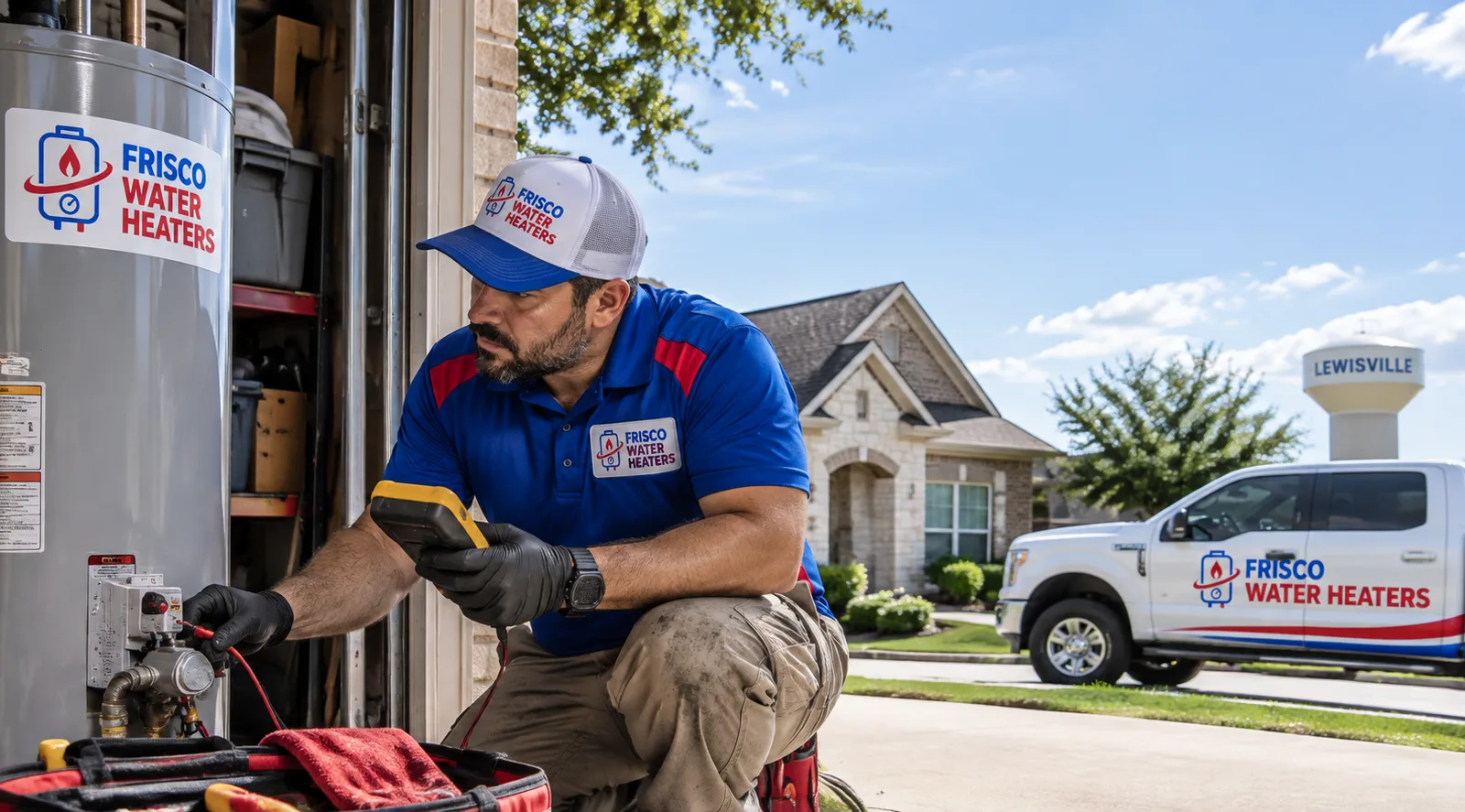
A leaking tank, cold shower, or tankless error code can disrupt the whole household. Same day water heater service Lewisville homeowners request should begin with a focused diagnosis, not an assumption that the unit must be replaced. Frisco Water Heaters checks the symptoms, identifies the failed component, and explains whether repair or replacement is the practical next step.
Working from our Frisco base, Frisco's local water heater service helps Lewisville households with conventional tank and tankless equipment. Same-day scheduling depends on the time of the request, travel, parts availability, and the condition of the system. We set a realistic arrival window rather than promising a time that cannot be met.
Active water around the unit deserves immediate attention. If it is safe to do so, shut off the water supply to the heater. For an electric unit, use the dedicated breaker. If you smell gas, leave the area without operating electrical switches and contact the gas utility or emergency services from a safe location. Do not attempt to relight or dismantle the appliance.
Testing may include the power supply, gas supply, thermostat, heating elements, ignition assembly, flame sensor, and control board. The correct checks depend on the fuel type and model.
Water may come from a supply connection, isolation valve, temperature and pressure relief valve, drain valve, condensate line, or the tank itself. A leaking tank generally requires replacement rather than a patch.
Water that turns cold, runs out quickly, or becomes too hot can point to thermostat trouble, sediment, a failed element, burner problems, flow restrictions, or an undersized system.
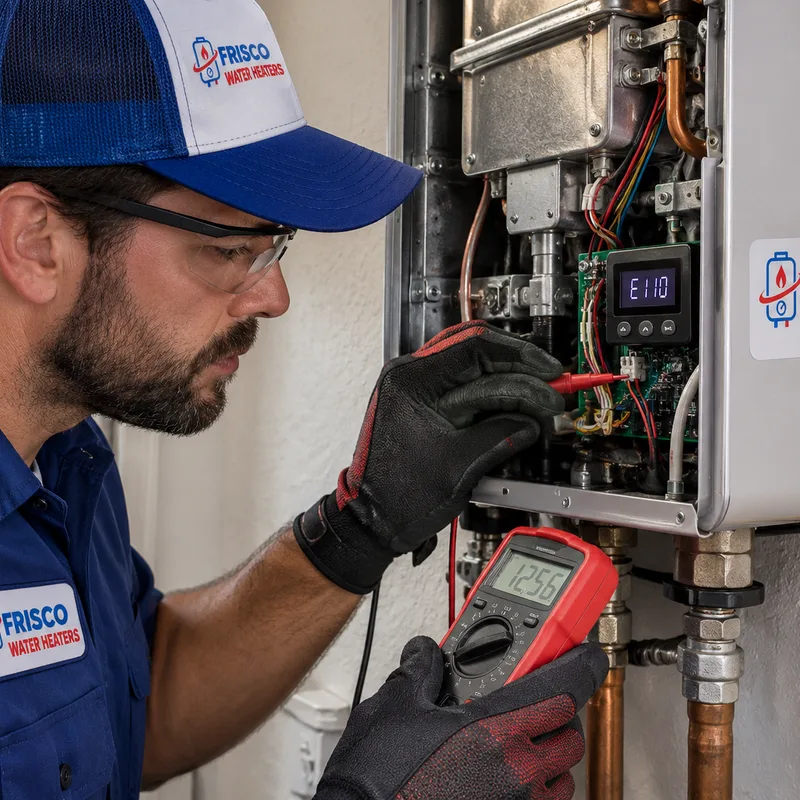
The displayed code provides a starting point, but it is not a complete diagnosis. Technicians verify combustion, venting, flow, water pressure, sensors, wiring, and manufacturer-specific fault history.
Popping and rumbling can indicate mineral scale or sediment. Unusual combustion sounds or exhaust odors require prompt professional attention and should not be ignored.
Diagnosis can cover the igniter, thermocouple or flame sensor, gas valve, burner, safety switches, venting, and combustion air. Safety controls should never be bypassed.
Tankless units require model-specific diagnosis. A technician starts with the error code and operating history, then checks inlet screens, flow sensors, ignition components, venting, condensate drainage, gas delivery, electrical connections, and scale buildup. Resetting a code without finding its cause may provide only temporary relief.
Tankless water heater repair Lewisville households need can involve cleaning a blocked inlet filter, correcting a condensate issue, servicing an ignition component, replacing a sensor, or flushing mineral deposits from the heat exchanger. A flush is maintenance, however, and will not repair a damaged heat exchanger or failed electronic control.
Lewisville has neighborhoods with equipment of different ages and configurations. Established homes near Old Town may have tighter utility spaces or older vent routes, while newer construction around Castle Hills may use modern tankless controls and dedicated service valves. Homes near Lake Lewisville may also include seasonal-use or low-occupancy periods, which can make stale water, shutoff procedures, and restart checks relevant. The equipment and installation determine the work, so the inspection comes before any recommendation.
Step 1 of 5
Share whether the unit is leaking, producing no hot water, displaying a code, or making unusual sounds. The model number, fuel type, and a photo of the equipment can help with preparation.
Step 2 of 5
Keep people away from standing water and hot discharge. Shut off water or power only when you can reach the controls safely. Leave immediately if gas or combustion fumes are suspected.
Step 3 of 5
The technician confirms the complaint and checks the applicable water, gas, electrical, venting, and control components. Diagnostic steps vary between storage tanks, electric units, gas units, and tankless systems.
Step 4 of 5
You receive an explanation of the fault, the proposed repair, and any reason replacement may be more sensible. Work should begin only after the scope and price are clear.
Step 5 of 5
When the needed part and conditions allow, the repair is completed during the visit. The system is then checked for proper heating, safe operation, leaks, and normal control response.
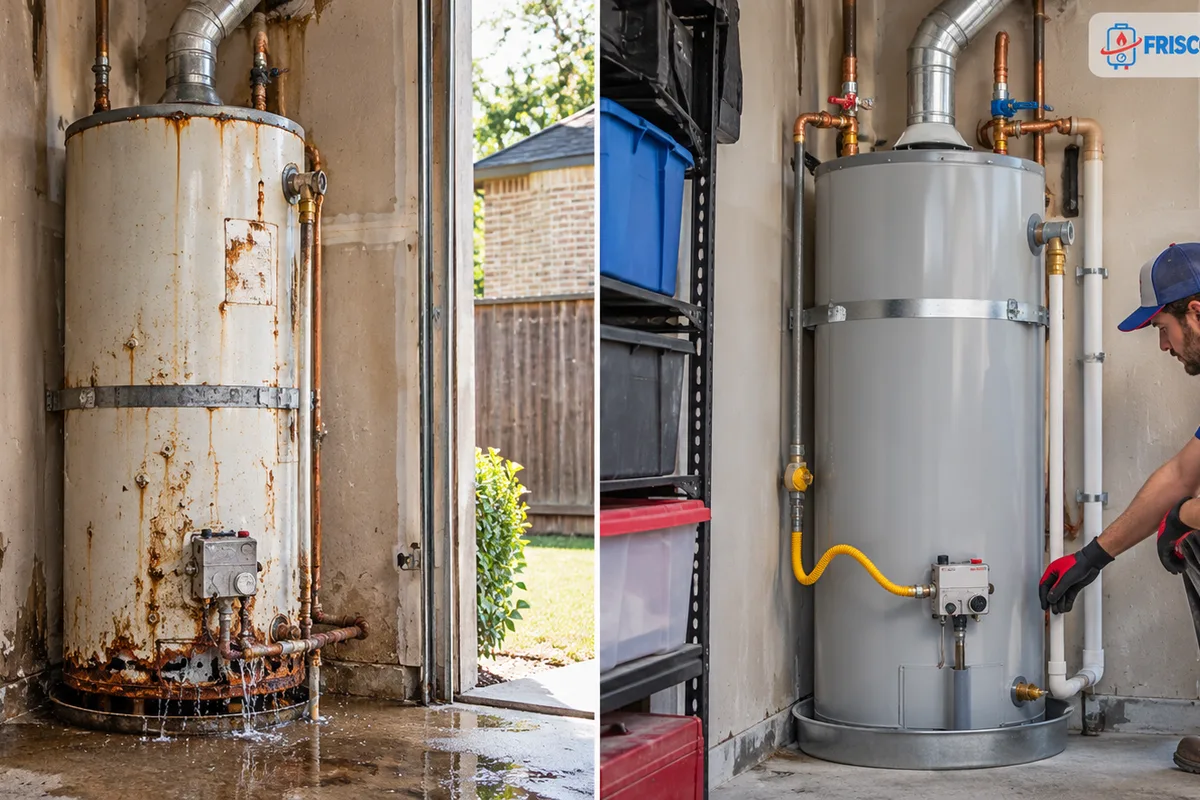
Repair is often reasonable when the failure is confined to a serviceable component and the tank or heat exchanger remains sound. Examples include certain thermostats, heating elements, igniters, flame sensors, valves, and model-compatible controls. Parts availability matters, especially for discontinued tankless models.
Replacement becomes the stronger option when a storage tank is leaking through its body, a heat exchanger is damaged, corrosion is extensive, required parts are unavailable, or the cost of repairing an aging unit approaches the cost of suitable new equipment. Repeated failures also change the calculation. The recommendation should account for the unit's condition, repair history, capacity, venting, fuel supply, and available installation space.
A replacement may also require code-related updates to venting, drain pans, discharge piping, gas connections, electrical service, combustion air, or expansion control. These items are assessed at the property because the existing installation determines the scope.
A diagnostic service visit typically ranges from $100 to $250, while common tank repairs may run about $200 to $900. Tankless repairs often range from $250 to $1,200 or more when controls, valves, or heat-exchanger work are involved. These are general, nonbinding estimates. Fuel type, model, fault, parts availability, access, venting, after-hours scheduling, and code corrections change the final price. Replacement is quoted separately when repair is not practical. The exact cost is confirmed after the technician inspects and tests the system.
A good diagnosis separates the symptom from the cause. For example, lukewarm water from an electric tank may involve a thermostat or heating element, but wiring and power supply must also be checked. A tankless ignition code may involve the igniter, gas pressure, venting, flame sensing, or condensate management. Replacing the first suspected part without testing can waste time and money.
Frisco Water Heaters explains what failed, what can be repaired during the visit, and whether a special-order component is needed. If the unit cannot be returned to service the same day, you should know why and what happens next. Any visible safety concern, such as improper venting, damaged wiring, active leakage, or signs of combustion trouble, is addressed in the recommendation.
Lewisville's hot summers can increase demand when households have guests or return from travel, while winter cold snaps may expose marginal ignition, venting, or capacity problems. Weather does not diagnose a failure, but current conditions can affect demand, travel, and parts availability. Contacting the team early in the day gives the best chance of same-day arrival and completion.
Describe the leak, error code, or loss of hot water as soon as you notice it. Clear details about the model and symptoms help the team prepare for the service visit.
Call for a Free QuoteMany common faults can be repaired the same day when scheduling, access, and parts availability allow. Standard thermostats, heating elements, igniters, sensors, and valves may be available quickly, while proprietary tankless controls or discontinued parts can require an order. An early request and the model number improve preparation.
An active leak requires prompt action because escaping water can damage nearby flooring, walls, and belongings. If you can do so safely, close the water shutoff and turn off the unit's energy source. A leaking fitting or valve may be repairable, but water coming through a corroded tank body usually means the tank needs replacement.
Many tankless brands can be diagnosed and serviced, but repair depends on model-specific parts, technical information, and the unit's condition. Providing the brand, model number, and displayed error code before a Lewisville visit helps determine what parts or tools may be needed.
Hot-and-cold fluctuations can result from low flow, a clogged inlet screen, scale, a faulty flow sensor, unstable gas delivery, plumbing cross-connections, or demand beyond the unit's capacity. Diagnosis should include actual flow and operating checks rather than relying on the symptom alone.
Do not attempt a flush during an active leak, ignition fault, electrical problem, or repeated shutdown. Descaling can remove mineral deposits when performed correctly, but it will not fix failed controls, sensors, valves, or a damaged heat exchanger. A technician can determine whether maintenance or repair fits the fault.
Provide the equipment type, fuel source, brand, model number, approximate age if known, symptoms, and any tankless error code. Mention standing water, gas odor, unusual exhaust smells, or a tripped breaker immediately. Photos of the unit and its data label can also help the team prepare before traveling to Lewisville.
The repair scope and price should be presented after diagnostic testing identifies the likely cause. Final cost depends on the part, access, equipment condition, and any safety or code issue found at the Lewisville property. You can review the recommendation before authorizing the work.
Share the symptoms, equipment type, and any visible error code. Frisco Water Heaters will outline availability, inspect the system, and explain the practical repair or replacement path.